The Producers
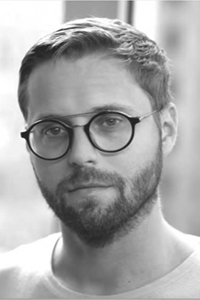
Ben Hethcoat — Director, Writer, Producer
Ben Hethcoat is the son of a medical examiner-coroner, Dr. Gayland Hethcoat. He has spent the last ten years travelling with Dr. Noguchi all around the world at medical-legal gatherings such as the World Association of Medical Law. He currently works as Senior Video Producer at Crooked Media, where he oversees video production for Pod Save America and develops original, video-first series about news and politics. Before joining Crooked, Ben was a Video Producer at Marketplace, creating explainer videos that demystified the economy and its impact on everyday life. Hethcoat was a guest speaker at the 2025 SXSW Festival, participating in a panel about podcast video.
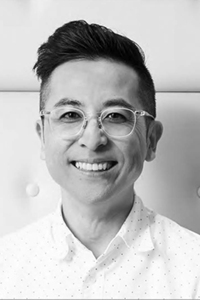
Keita Ideno — Director, Editor, Writer
Keita Ideno is a writer and editor based in Los Angeles. Similar to Dr. Noguchi, Ideno immigrated from Japan to the United States to follow his dreams. While at San Diego State University, Ideno edited the short film, Last Swing Dance. Kathleen Kennedy, Steven Spielberg's longtime producer, loved the film, and arranged for it to be screened at the Director's Guild of America. This experience motivated Ideno to pursue a film career professionally. After 20 years in the industry, Ideno has edited over 10 feature films in a wide variety of genres, including documentaries, animated television series, and streaming shows. In 2018, Ideno edited and co-wrote the documentary Kusama-Infinity, which had its World Premiere in the US Documentary Competition at the Sundance Film Festival. In 2021, he was nominated for a Daytime Emmy for his work on Netflix's Cat People. Most recently, Ideno edited the documentary feature Aum: The Cult at the End of the World, which also had its world premiere in the US Documentary Competition at Sundance 2023.
Making The Film
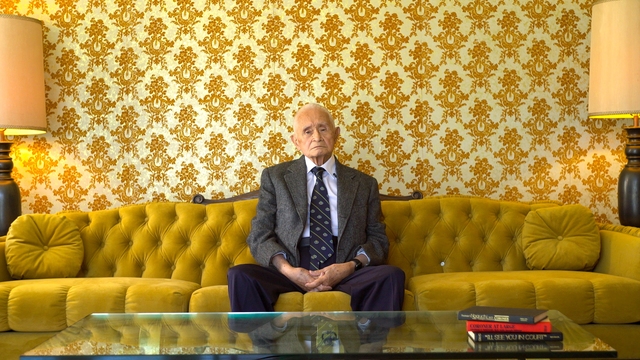
Director's Statement
This film is deeply personal to me. My father, Dr Gayland Hethcoat, was a coroner-medical examiner, and from an early age, I was immersed in the world of death investigations. I saw firsthand how public servants in these roles serve their communities with dedication, often without recognition. When I discovered the story of Dr. Thomas Noguchi, I was captivated.
Making this film has been a decade-long journey filled with twists, setbacks, and moments where the finish line seemed out of reach. But whenever doubt crept in, I found strength in Dr. Noguchi's own perseverance. His battles - against political pressure, media scrutiny, and racial prejudice, reminded me why this story had to be told. His story isn't just about famous cases; it's about integrity in the face of adversity. One of the most powerful discoveries during production was a 1967 letter from George Takei, advocating for Dr. Noguchi during a trial that threatened his job. Finding this forgotten piece of history was a turning point. George's participation in the film helped highlight how the Japanese American community rallied around Dr. Noguchi, and it connected us with the Japanese American National Museum, which became our fiscal sponsor. That community support gave the film a deeper sense of authenticity and purpose.
The journey of making this film also became personal in ways I never anticipated. During production, I lost my younger brother, Nick, to suicide. His passing forced me to step away from the project for over a year. When I returned, my understanding of grief had shifted. The clinical detachment often associated with forensic science was now left intertwined with my own personal loss. I came to see Dr. Noguchi's work in a new light - not just as a science, but as a deeply human effort to provide closure and dignity to those left behind. That perspective shaped every aspect of the film. A major turning point in crafting this documentary was partnering with Keita Ideno, my editor and co-director. Being from Japan, Keita brought a cultural depth to the film that I couldn't have achieved alone. He helped uncover the nuanced racial and political dimensions of Dr. Noguchi's career, making the film richer and more layered than I had initially envisioned.
At it's core, this film is about the power of truth. Dr. Noguchi's work laid the foundation for modern forensic science, influencing everything from true crime documentaries to pop culture portrayals like CSI and Quincy, M.E. But beyond that, his story challenges us to reconsider how we judge those who stand at the intersection of science, politics, and public perception. He wasn't just a "celebrity coroner" -- he was a man who fought to reveal uncomfortable truths, no matter the cost.
This film is my attempt to honor that legacy and to remind audiences that public servants like Dr. Noguchi play a vital role in safeguarding truth in an era where perception often outweighs reality.
- Ben Hethcoat, Director, Coroner to the Stars

 The extraordinary journey of Dr. Thomas Noguchi, the former Los Angeles County Chief Medical Examiner-Coroner, whose groundbreaking autopsies forever shaped American culture. From Marilyn Monroe and Robert Kennedy, to Sharon Tate and Natalie Wood, Noguchi's outspoken expertise pushed forensic science into the spotilight -- even as Hollywood elites and political adversaries sought to silence him. A Japanese immigrant who unwittingly rose to fame in a city driven by stardom, Noguchi's fearless pursuit of truth often placed him in the crosshairs of controversy.

 Slamdance Film Festival 2025 | Audience Award, Best Documentary