


Seeing Daylight: The Photography of Dorothy Bohm
A retrospective on one of Britain's most accomplished street photographers
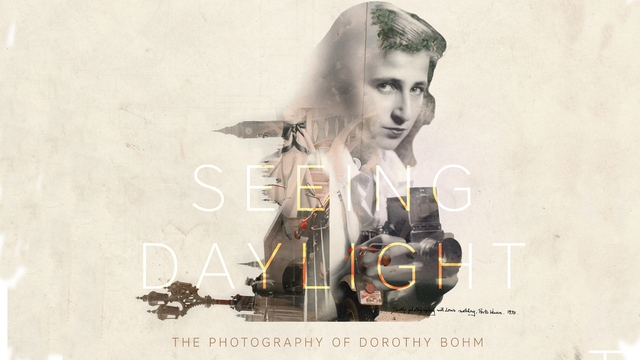 Dorothy Bohm is one of Britain’s finest street photographers, arriving in the UK in 1939 after fleeing Nazi persecution in Lithuania. At 92 she continues to take pictures, capturing moments in life with humanity and compassion. With contributions from friends and family, and reflections from Dorothy herself, this insightful documentary reflects her most important images and revisits the places that have shaped her unique view of the world.
“The great thing about Dorothy is that she had a story to tell. Of loss, of displacement,” says writer and historian Ian Jeffrey. Dorothy Bohm was born in 1924 in Königsberg, East Prussia, to a thriving Jewish family. “I had a very happy childhood there,” she remembers, before her tone turns melancholy, “So many things happened afterwards.” In 1932, Dorothy’s family made the decision to migrate to Lithuania in the wake of simmering antisemitism. Seven years later, Hitler’s invasion sparked a hurried exodus to England. Her father left them at the train station, bestowing Dorothy one last gift: his camera. “I leant out of the carriage and my father took off his Leica and said, ‘This might be useful to you now.’ I had no interest in photography at all. Odd.” From this disrupted childhood would emerge inspiration and a lifelong passion to document the world around her.
Once in the UK a cousin of Dorothy’s father suggested that she studied photography in Manchester, and she was accepted at the young age of sixteen. By 1946, she would have her own studio. “I think the difference with her and other photographers is that she’s not just seeing the picture, she’s feeling the pictures and so that emotion comes out in the imagery,” says photographer Marissa Roth, “So you feel her pictures, you feel the passion in it, you feel the emotion, the pathos, the humour, the irony.”
FULL SYNOPSIS

