Katwe
A salt-mining community navigate broken promises of development
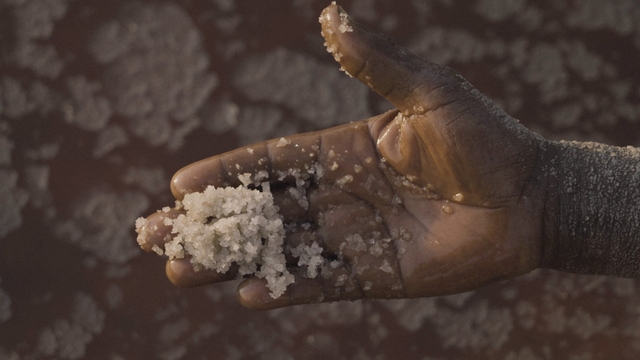
 Nima Shirali’s quietly witty, visually stunning film captures life in Katwe, Uganda; a community nestled between a salt lake and a national park. Through an enthusiastic teacher, a weary caretaker and a razor-tongued mother, the lake appears both lifeline and burden: promise eroded by seasonal floods, collapsing prices and toxic labour. As a flamboyant local politician sells grand schemes, residents quietly ask what future remains.

Festivals and Awards
 Tempo Documentary Festival 2025 | World Premiere
Sheffield DocFest 2025 | International Premiere
Cine Eco Film Festival 2025 | Environmental Anthropology Award
Another Way Film Festival 2025 | Official Selection
Aegean Film Festival 2025 | Greek Premiere
Tempo Documentary Festival 2025 | World Premiere
Sheffield DocFest 2025 | International Premiere
Cine Eco Film Festival 2025 | Environmental Anthropology Award
Another Way Film Festival 2025 | Official Selection
Aegean Film Festival 2025 | Greek Premiere
Reviews and More
"A natural resource is beset with the realities of capitalist and colonial intervention, and the rolling boil of frustration is deftly harnessed by Shirali” – Now Then Magazine